

Module 704 is now live inside Ad Creative Academy. And it might be the most important module we have built.
How many ads did your team ship last month? Ten? Twenty? Maybe fifty if you had a really good month?
Here is the reality. The brands winning on paid social right now aren't shipping fifty ads. They're shipping hundreds. Some are shipping thousands. And they're not sacrificing quality, they're not burning out their teams, and they're not throwing spaghetti on the wall. They've built something different. They've built a system.
That system is the Growth Creative Operating System. It is not a workflow or a template. It is a complete framework for how creative should function in modern performance marketing. It covers research, concept development, production, testing, and iteration, and it is designed specifically for how Meta's algorithm evaluates and rewards creative today.
Meta's Andromeda update changed everything. It no longer picks a winner and pours budget in. It matches creative to where each user is in their journey. It doesn't reward your best ad anymore. It rewards your best system. If your top performers have plateaued, your CPMs are climbing, and your ROAS has started sliding, the algorithm changed underneath you.
In Module 704, Mirella Crespi, founder of Creative Milkshake, breaks down the exact operating system her team uses to produce over 3,000 ads a month for brands like Canva, American Express, Vinted, and Spoiled Child. Without burning out, sacrificing quality, or guessing.
This is where it starts.

What Is the Growth Creative Operating System?
The Growth Creative Operating System is a complete framework for how creative should function in modern performance marketing. It is not a workflow or a template. It is an operating system designed specifically for how Meta's algorithm works today.
Most teams approach creative production the same way they always have. They brief an idea, produce a few variations, find a winner, and pour budget into it. That approach worked when the algorithm rewarded a single best performer. It does not work anymore.
The brands consistently scaling on paid social have moved to a fundamentally different model. They treat creative like a system, one that generates hypotheses, tests them at volume, learns from the data, and iterates without starting from scratch every time. The Growth Creative Operating System is the blueprint for building that machine inside your own team or agency.
Why Meta's Andromeda Update Changed the Rules
For the last few years, we have known that creative is your targeting. But if you have been running ads recently, you have probably noticed something changed. Your top-performing ads suddenly hit a ceiling. Your CPMs are much higher. Your ROAS started declining.
What happened? Meta rolled out a massive algorithm update that fundamentally changed how the platform evaluates and delivers creative.
Meta's old ad system, called DLRM, pulled signals like clicks and page likes but completely ignored the order and timing of those actions. It treated every click the same. Budget would concentrate on a single winning creative, finding a one-size-fits-all approach, and the cycle would repeat until that creative burned out.
The new system uses sequence learning. It analyses event streams with timestamps to understand exactly where a user is in their journey, whether they are in discovery, consideration, or the purchase phase. Meta has also built a hierarchical ad index, a sophisticated filing system that organises ads based on multiple dimensions: formats, messaging, persona, visual style, and hook structure. They are using AI to match the right creative to where each user is in their journey. The goal is more personalisation, faster matching, and less reliance on targeting.
Before, media buying meant uploading a few ads, Meta would pick a winner, and budgets would concentrate there. Now, no single creative dominates. Budget is spread more evenly. Meta actively penalises generic broad creative and rewards persona-specific ads that match users to their journey stage. If all your ads look and talk the same, Meta groups them together, leading to diminishing returns and faster creative fatigue.
If you have true creative diversity, with different formats, personas, hooks, and motivators, Meta sees each as a distinct entity, unlocking new audiences and extending reach. This is why creative volume and diversity are now essential for survival. Winning brands will be those with the best creative system designed for how Andromeda works.
What's Inside Module 704
Module 704 covers the Growth Creative Operating System end to end. Here is what you will learn.
The Andromeda Shift
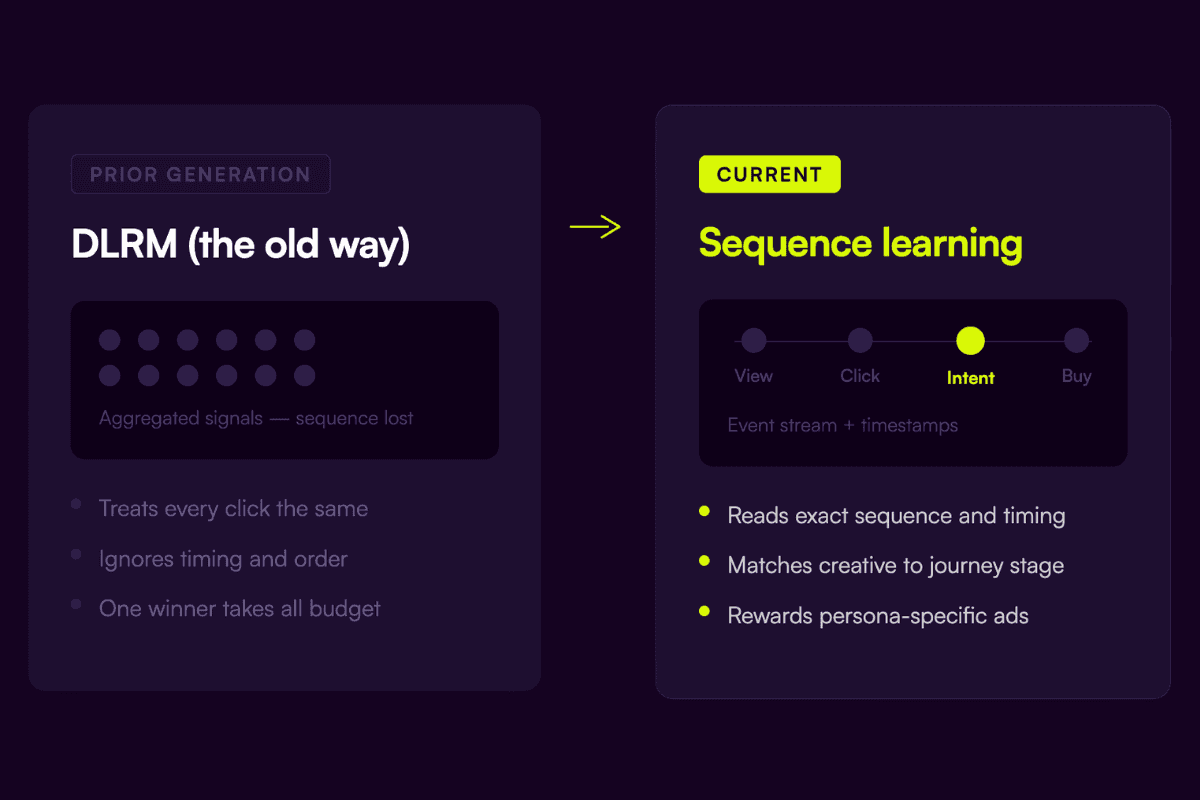
Before you can build the right system, you need to understand why the old one stopped working. This section breaks down exactly what changed with Meta's algorithm update, what sequence learning means for your creative strategy, and why the brands still scaling have fundamentally different creative infrastructure to the ones that are struggling.
The Research Framework
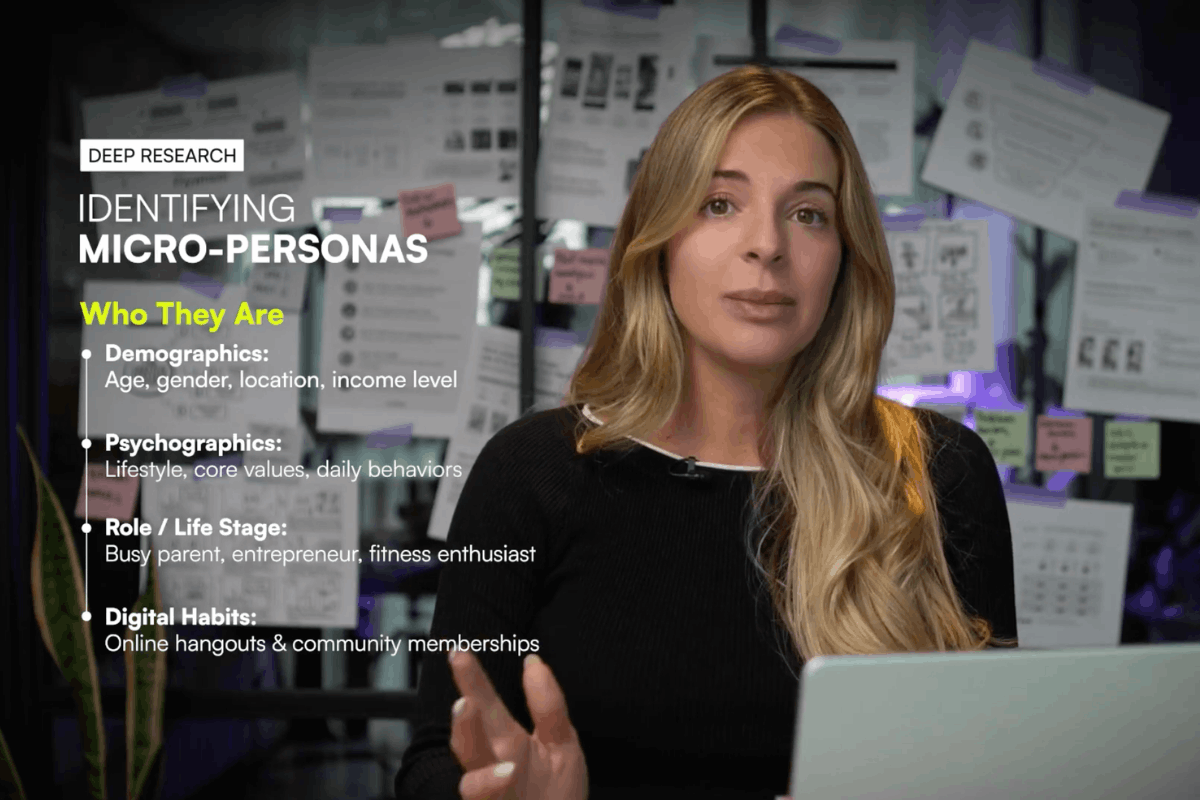
Great creative starts with great research. The research framework inside Module 704 is built on three pillars: competitor intelligence, micro-persona development, and platform trend analysis.
Competitor intelligence means going beyond scrolling the ad library. Using AI-powered Gumloop workflows that connect to the Foreplay API, the AI scans a competitor's ad library, identifies the top 20 longest-running ads, watches them, and generates a comprehensive analysis sheet breaking down formats, hooks, visual styles, personas, angles, proof elements, and calls to action. This turns hours of manual work into minutes.
Micro-persona development means going deeper than broad macro-personas like "Sarah, 35, likes yoga." For any given brand, there are multiple distinct audiences with completely different pain points and reasons to buy. A footwear brand is not targeting one type of customer. It is targeting the skeptical shopper, the frequent traveller, the fashion enthusiast, the pregnant mum. Each has different pain points and requires fundamentally different creative.
Strategists mine forums, reviews, and comment sections to uncover emotional language and desires. Tactical sources include Reddit using tools like GigaBrain, Amazon reviews where the three and four-star reviews are most honest, YouTube comments, Facebook groups, and customer support transcripts. A Gumloop workflow then organises this raw data by emotion, suggests angles and hooks based on verbatim quotes, and identifies and maps micro-personas into comprehensive sheets.
Platform trend analysis means systematically analysing organic content through four lenses: trends, themes, sound, and visual effects. Understanding the native content patterns your audience already consumes means your ads blend in before they pattern-interrupt.
The Concept Matrix
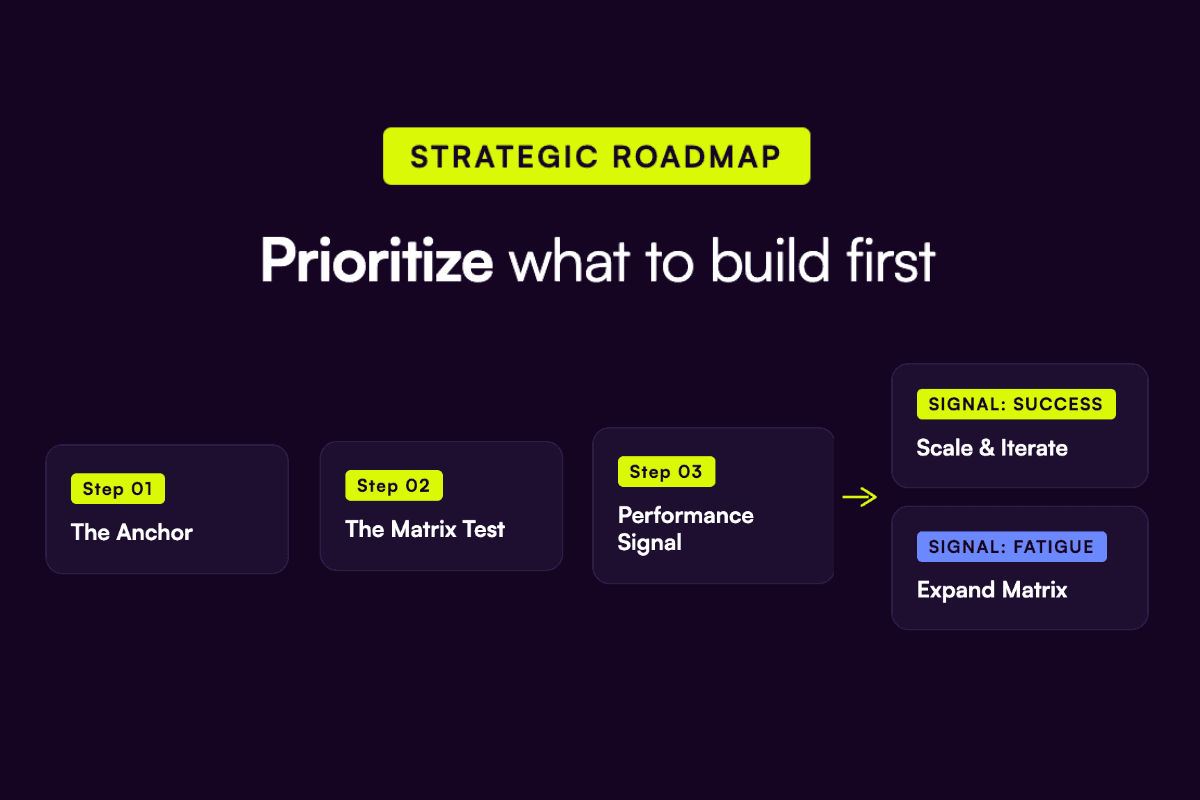
This is the framework that makes volume without chaos possible.
A concept is the intersection of the offer, which is what, the angle, which is why, and the audience, which is who. The Concept Matrix uses four dimensions: persona, angle, awareness level, and format. Combine three personas, three angles, four awareness levels, and three formats and you get 108 unique video concepts from a single strategic starting point.
Awareness levels cover the full customer journey. Unaware audiences need pattern interrupt techniques and curiosity-driven hooks. Problem-aware audiences need validation. Solution-aware audiences need differentiation. Product-aware audiences need proof and social validation.
Every ad should be a hypothesis. Document what you are testing, what you expect to learn, and how it informs the next iteration to build institutional knowledge. This is what separates teams that scale from teams that guess.
The Winner Playbook
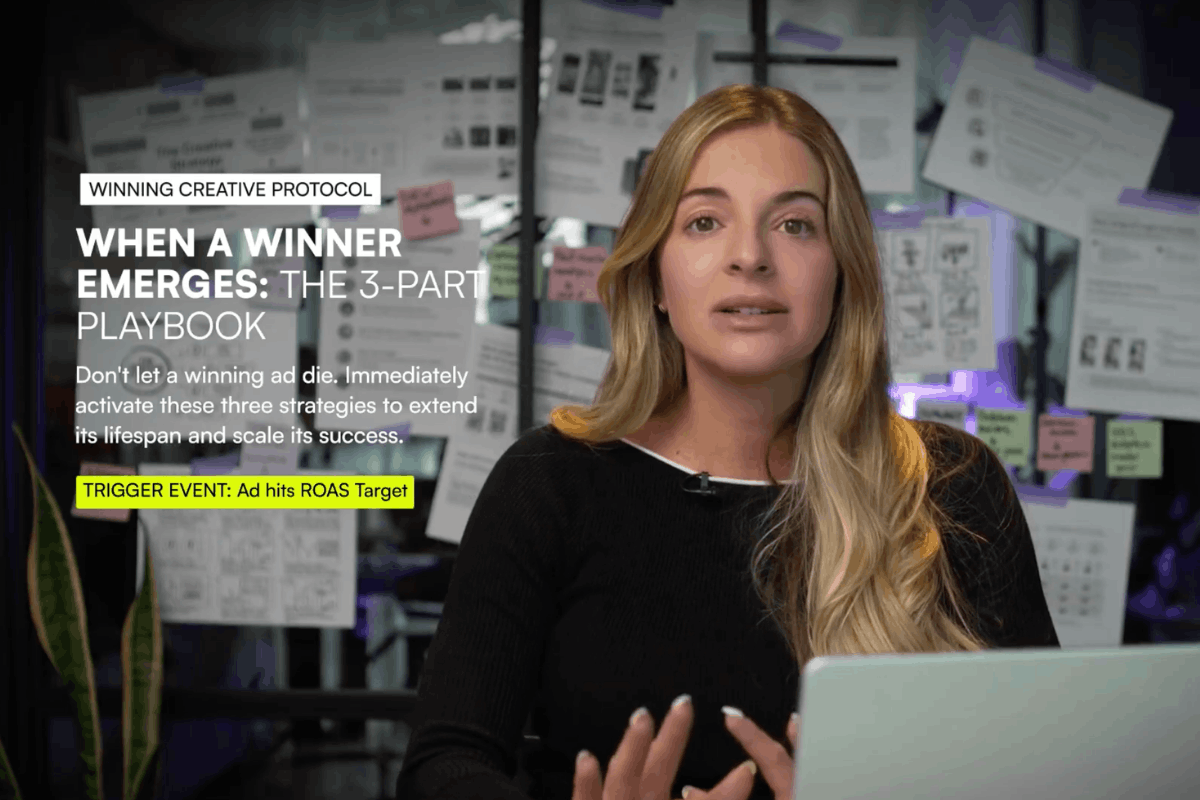
Finding a winning creative is only the beginning. The brands that scale sustainably are the ones that know how to extend the life of a winner without simply running it until it burns out.
The Winner Playbook covers three core iteration strategies. Talent refresh means shooting the same script with at least five different people to unlock new audiences. Format variation means turning a talking head into a point of view piece or a UGC clip into a polished video sales letter. Modular remixing means taking the winning hook from ad A, the body from ad B, and the call to action from ad C and combining them into something new.
Big visual swings matter too. Shooting the same script in a car instead of a kitchen makes it a new ad to the algorithm. Visually distinct hooks targeting different triggers or personas allow one script to reach ten different audience pools.
The Gap Between 12 Ads and 3,000? A System.
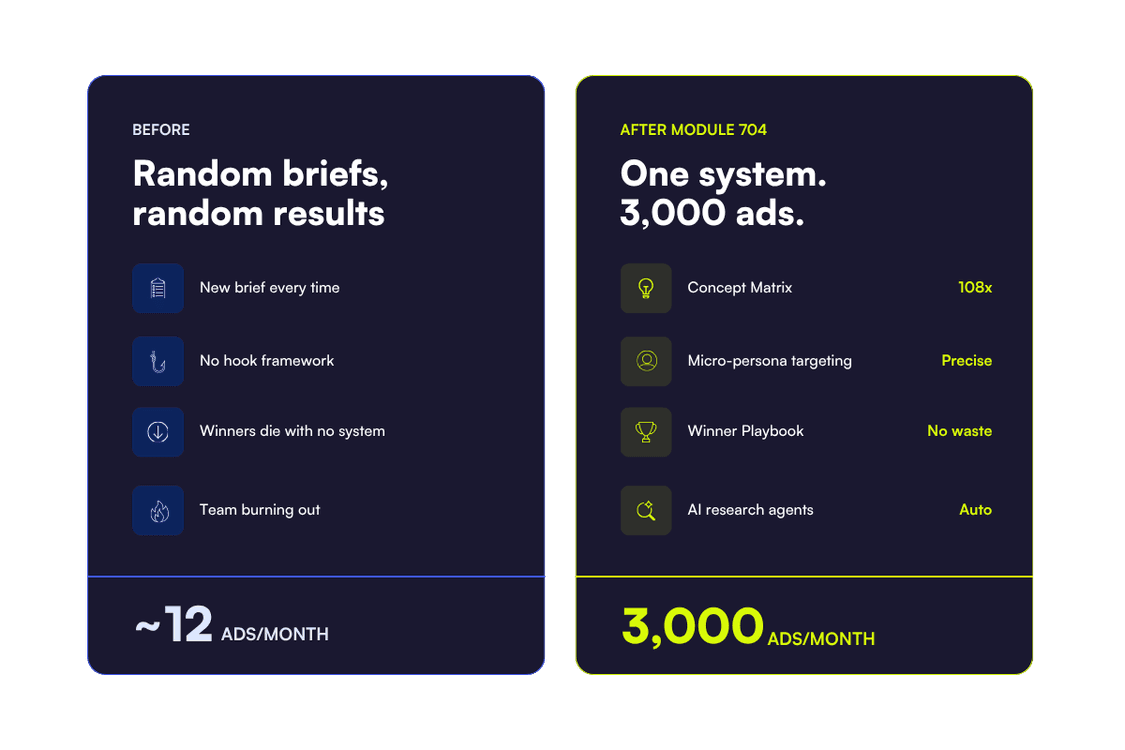
Most teams produce around 12 ads a month. They write a brief, produce the creative, find something that works, and then scramble to figure out why it worked and how to repeat it. There is no system. Winners die without being properly dissected. Research is done from scratch every campaign. The team burns out trying to keep up with creative fatigue.
The Growth Creative Operating System changes every part of that cycle. Research is automated. Concepts are generated systematically. Production is modular. Iteration is structured. And every test builds on the last one rather than starting over.
The most successful brands and the highest spenders are testing creative at high speed and scale, launching 50 or more ads each week. They build systems that continuously generate, test, and refine high-performing creatives based on real data.
Bonus: AI Agents Included
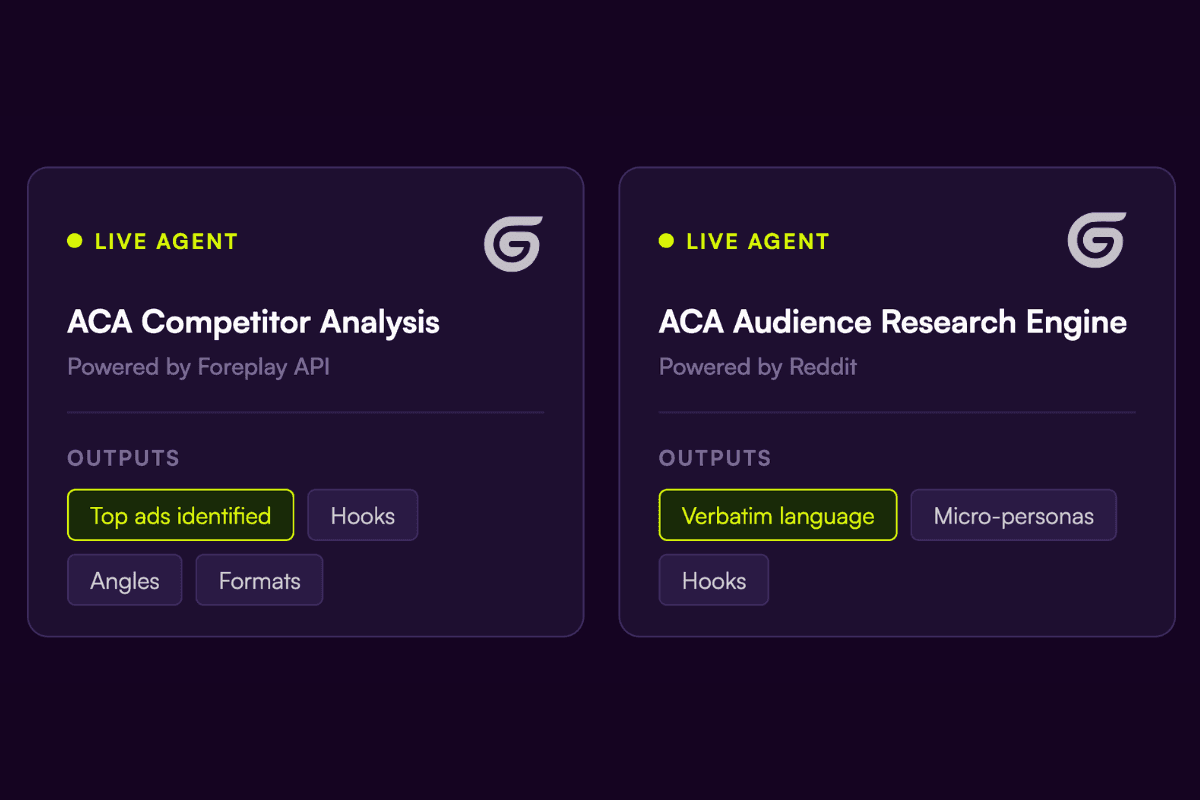
From Mirella's team to yours. Two custom Gumloop agents, built for students.
Most strategists spend days on research. These agents do it in minutes, so you can spend your time on strategy, not sourcing.
ACA Competitor Analysis (Foreplay) Pulls your competitors' top ads, breaks down what's working, and tells you exactly what angles, hooks, and formats they are scaling.
ACA Audience Research Engine (Reddit) Scans reviews, forums, and comments to find the exact words your audience uses, then maps them into personas and hooks ready to brief.
Both agents are included in the module and ready to use from day one.
Who This Module Is For
Module 704 is built for performance marketers, creative strategists, and agency teams who are already running paid social and want to operate at a higher level. If you are a creative strategist, you are the bridge that connects data and creative production and you orchestrate the system and glue it all together. This module gives you the frameworks, the workflows, and the AI agents to do exactly that.
It is not an introductory module. It is a systems module, built for people who are ready to move from executing tasks to running the machine.
What Mirella Says
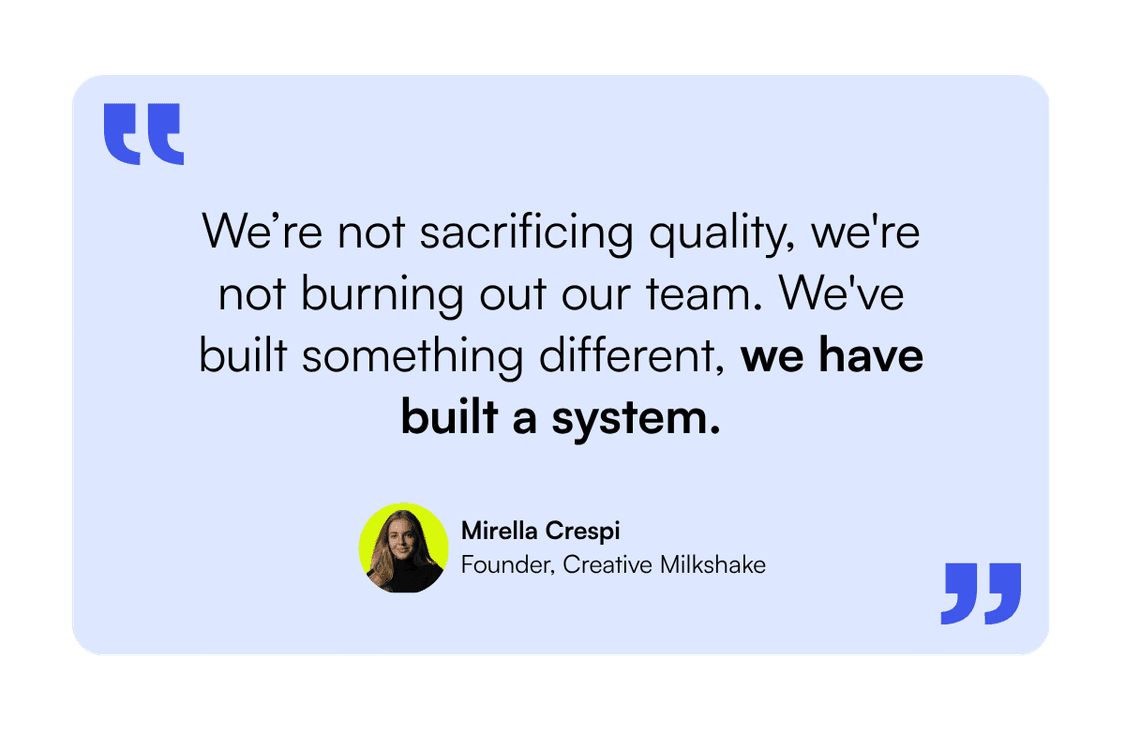
Mirella Crespi is the founder of Creative Milkshake, one of the leading creative strategy and production companies in performance marketing. Her team produces over 3,000 ads a month for some of the world's fastest-growing brands. Module 704 is a behind-the-scenes look at exactly how they do it.
Start Building Your System
Stop guessing. Stop burning budget. Ready to stop guessing and start scaling? Module 704 is one part of a complete certification program built for the AI era.
Join the Academy and get instant access to every framework, workflow, and tool you need to become a world-class creative strategist.